Are Dental Implants Worth It? Benefits, Risks & Results
Key Takeaways
Dental implants cost more upfront than bridges or dentures, but for most patients, they are the most durable, natural-feeling tooth replacement available. They preserve the jawbone, leave neighboring teeth untouched, and routinely last 20 years or more with proper care. Like any surgery, implants carry real risks, and not everyone is an ideal candidate, but a thorough evaluation with an experienced oral surgeon can tell you quickly whether implants are the right fit for your smile.
What Separates Dental Implants From Other Options?
According to the American College of Prosthodontists, more than 120 million Americans are missing at least one tooth, and over 36 million have lost all of their teeth.
If you are one of them, you have probably already discovered that dental implants have become the most durable, functionally complete tooth restoration option on the market. You may have also discovered that they cost more than bridges or dentures, which leads most of our patients to ask the same question before moving forward: Are dental implants really worth it?
The honest answer depends on your health history, your bone condition, and what you want from your smile in the long run. In this blog post, we’ll walk you through the real benefits, the known risks, and what you can realistically expect from your results.
What Are the Benefits of Dental Implants?

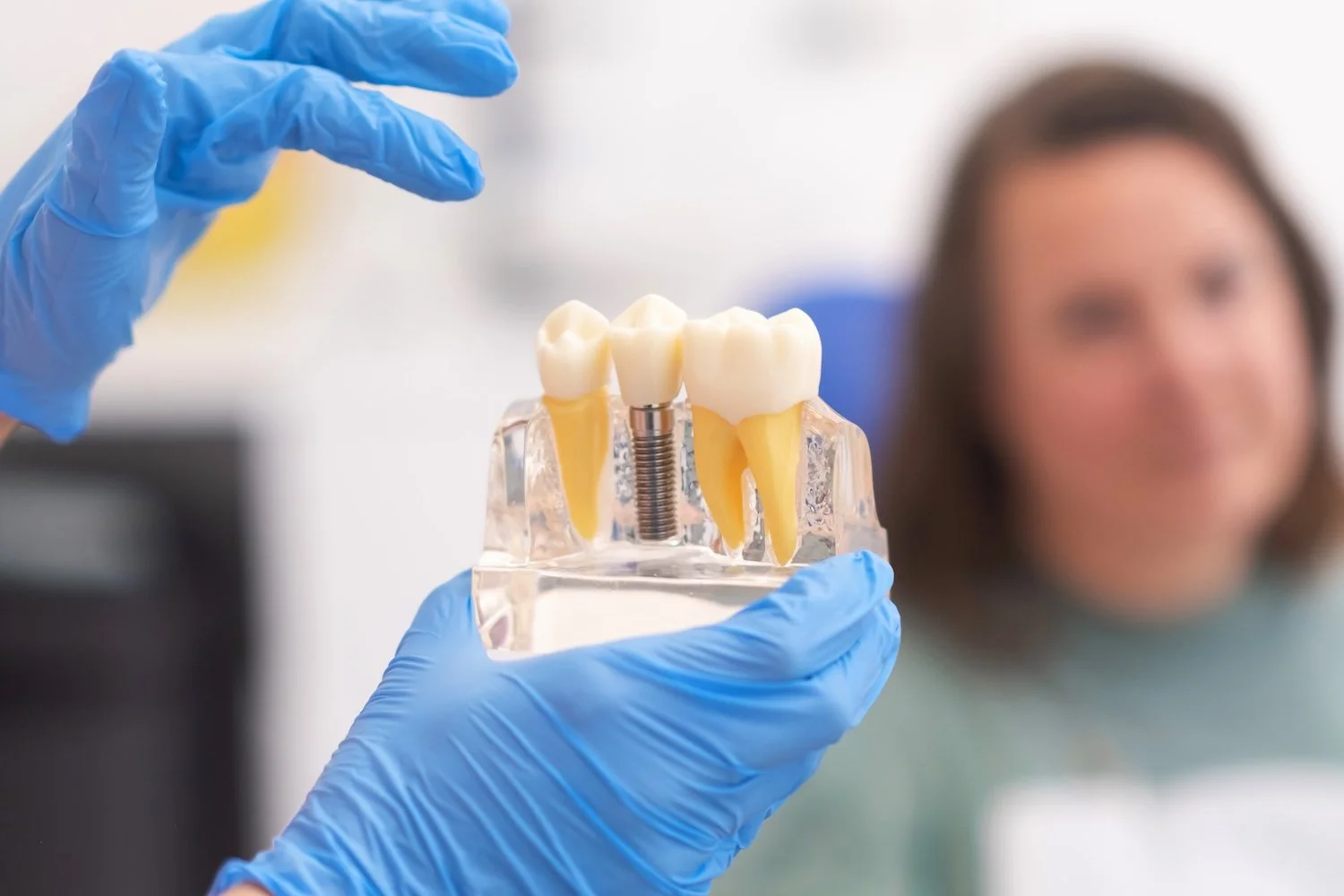
A dental implant is a small titanium post that we surgically place into your jawbone where your tooth root used to be.
It then bonds with the surrounding bone through a process called osseointegration. Once it has integrated, your dentist attaches an abutment and a custom crown on top to create a replacement tooth that closely mimics the structure and feel of a natural one.
Bridges and dentures rest above the gumline or rely on neighboring teeth for support. Implants work from inside the jaw, functioning much like a natural tooth root and allowing you to brush and floss this as a natural tooth. That single placement difference is behind most of the long-term advantages our patients experience.
Here are some of the main benefits of dental implants:
Bone preservation. When you lose a tooth, the jawbone beneath it begins to shrink from lack of stimulation. An implant transmits biting forces into the bone the way a natural root does, which slows or prevents that deterioration. Bridges and dentures cannot offer the same benefit.
No impact on neighboring teeth. Traditional bridges require grinding down the adjacent teeth to anchor the restoration. Implants stand on their own, leaving your surrounding healthy teeth untouched.
Function and comfort. Our patients consistently tell us they can eat, speak, and chew comfortably with implants in a way that is harder to replicate with removable dentures, which can slip or cause sore spots over time.
Longevity. With consistent at-home oral hygiene and routine professional cleanings, the implant post itself can last 20 years or longer. The crown on top may need replacement after 15 to 25 years, but the post bonded to your jawbone is built to remain stable well beyond that.
Natural appearance. Your dentist will color-match the crown to your surrounding teeth, and the finished result is generally indistinguishable from your natural smile.
Are There Risks With Dental Implants?
Placing a dental implant is a surgical procedure, and it is important to consider all the factors involved when deciding if this is the right solution for you. Infection, nerve irritation, sinus complications (more common with upper jaw placements), and implant failure are all possible, though they remain uncommon when the procedure is performed by a trained oral surgeon.
According to research published through the National Library of Medicine, implants have shown a 90 to 95 percent success rate over a 10-year window. When failures do occur, most happen in the first year, during osseointegration, before the post has fully bonded with the jawbone.
Several factors can raise your risk of failure or complications, including:
Uncontrolled diabetes
Active or untreated gum disease
Heavy smoking
Insufficient bone volume in the jaw
Immunosuppression
Certain medications, including bisphosphonates used for osteoporosis
A thorough pre-surgical evaluation with our team is the most reliable way to assess whether you are a strong candidate and identify any issues that need to be addressed before placement.
How Long Do Dental Implants Last?
Implant posts can last 20 years or longer with proper care and regular professional cleanings.
The crown portion may need replacement after 15 to 25 years, but the titanium post bonded to your jawbone is designed for long-term stability.
By comparison, traditional bridges that lean on neighboring teeth for support tend to need replacement every 10 to 15 years, and dentures require periodic adjustments and relining. When you look at the total cost of care over a 25-year window, implants often come out ahead.
Are Dental Implants Worth the Cost?
The upfront cost of a single implant typically ranges from $3,000 to $6,000 or more.
Costs depend on the complexity of your case and any preparatory procedures you may need. Insurance coverage is inconsistent, and many plans cover little to no part of the total cost.
Even so, long-term math tends to favor implants. A restoration designed to last 25 years or more compares favorably to alternatives that need replacement every 10 to 15 years. We also encourage you to factor in the indirect costs of leaving tooth loss unaddressed: jawbone deterioration, shifting of adjacent teeth, changes in bite, and ongoing maintenance of bridges or dentures.

Who Qualifies for Dental Implants?
Most adults who meet a few basic health criteria are good candidates.
During your consultation, we typically look for:
Adequate jawbone density to support the implant post
Healthy gums free of active periodontal disease
No uncontrolled systemic conditions that impair healing
A commitment to consistent oral hygiene
Age is rarely a limiting factor for adults. We typically advise younger patients to wait until jaw development is complete. If you need additional preparation, we can often incorporate bone grafting into your overall treatment plan before implant placement.
Quick Summary: How do Dental Implants Compare with Alternative Options?
| FEATURE | DENTAL IMPLANTS | BRIDGES | DENTURES |
|---|---|---|---|
| Longevity | Post lasts 20+ years; crown lasts 15 to 25 years. | Typically need replacement every 10 to 15 years. | Require periodic adjustments and relining; refit every 5 to 7 years. |
| Jawbone Health | Stimulates the bone and helps prevent deterioration after tooth loss. | Does not stimulate the bone; gradual jawbone loss continues. | Does not stimulate the bone; can accelerate bone and tissue loss over time. |
| Effect on Neighboring Teeth | Stands alone; surrounding healthy teeth are left untouched. | Adjacent teeth must be ground down to anchor the bridge. | No grinding required, but partial dentures put added pressure on remaining teeth. |
| Comfort & Fit | Feels like a natural tooth; no slippage or sore spots. | Generally comfortable, though it can be harder to clean around. | Can slip, shift, or cause sore spots, especially as the jaw changes. |
| Eating & Chewing | Restores full biting force; no dietary restrictions. | Restores most chewing function with minor restrictions. | Hard, sticky, or crunchy foods may be difficult to chew. |
| Maintenance | Same as natural teeth: brush, floss, and routine cleanings. | Requires special flossing tools to clean under the bridge. | Must be removed nightly for soaking and cleaning; adhesives often needed. |
| Appearance | Color-matched crown is generally indistinguishable from natural teeth. | Looks natural in most cases, with a visible gumline seam over time. | Can look less natural; facial sagging may develop as the jawbone shrinks. |
| Procedure | Surgical placement followed by a 3 to 6-month healing period. | Non-surgical; usually completed in two dental visits. | Non-surgical; fitted and adjusted over multiple visits. |
| Upfront Cost | Highest upfront cost; typically $3,000 to $6,000+ per implant. | Moderate upfront cost; often partially covered by insurance. | Lowest upfront cost; most often covered by dental insurance. |

Talk to Our Team at the Center for Oral Surgery + Dental Implants
Deciding whether implants are right for you is a conversation best had with an experienced surgical team.
At the Center for Oral Surgery + Dental Implants, we evaluate your bone structure, medical history, and goals before recommending a treatment plan.
As West Michigan's choice for oral surgery, we offer comprehensive implant consultations at our Grand Rapids and Rockford offices.
Frequently Asked Questions
1. Are dental implants worth it for a single missing tooth?
For most patients, yes. A single implant preserves the bone where the tooth was lost, leaves the neighboring teeth untouched, and looks and functions like a natural tooth. A traditional bridge requires altering the two healthy teeth on either side of the gap, which is why many of our patients choose an implant instead.
2. How painful is getting a dental implant?
Most of our patients tell us the procedure was much easier than they expected. We numb the area with local anesthesia, and sedation options are available if you would prefer them. Afterward, most discomfort is manageable with over-the-counter pain relievers and is often described as less painful than a tooth extraction.
3. How long does the full implant process take?
The timeline varies, but for most patients, the full process takes between three and six months from placement to final crown. The longest portion is osseointegration, the time your jawbone needs to bond with the implant post. If you require a bone graft beforehand, we will plan additional healing time into your treatment schedule.
4. Will my insurance cover dental implants?
Coverage varies widely. Some dental plans cover a portion of the cost of a crown or related procedures, while others cover little to none. We recommend reviewing your benefits before your consultation, and our team is happy to help you understand what your plan includes and discuss financing options.
5. Can dental implants fail?
Implants have a 90 to 95 percent success rate over 10 years, but failures can happen. Most occur during the first year, before the implant has fully bonded with the bone. Risk factors include uncontrolled diabetes, active gum disease, heavy smoking, and certain medications. We screen for these during your evaluation so we can address anything that might affect your outcome before surgery.
6. What happens if I do nothing about a missing tooth?
When a tooth is lost, the jawbone beneath it begins to shrink, the surrounding teeth can shift into the gap, and your bite may change over time. Over the long term, untreated tooth loss can affect chewing, speech, and even the structure of your face. Replacing the tooth, whether with an implant, bridge, or denture, helps protect your long-term oral health.