Crucial Correction
Impacted Canine Treatment in Grand Rapids & Rockford, MI to Protect Your Smile
An impacted tooth is "stuck" and cannot erupt into its proper place in your mouth. While the third molar (wisdom tooth) is the most common tooth to become impacted, the maxillary canine (upper eyetooth) is the second most common. The canine is a critical tooth in your dental arch—it is one of the strongest biting teeth, has the longest root, and plays a vital role in guiding your "bite" into the correct position and providing long-term strength.
Early Recognition and Treatment
Normally, maxillary canines are the last of the front teeth to erupt, usually around age 13. The older the patient, the less likely it is that the tooth will erupt naturally. Early recognition is the key to successful treatment.
collaboration and diagnosis
The American Association of Orthodontists recommends a panoramic X-ray and a dental examination at age seven to check for potential eruption problems.
Orthodontic Role: The orthodontist will place braces to open space for the impacted tooth.
Oral Surgeon Role: Our surgeons may be required to remove over-retained baby teeth, adult teeth, or any extra growths (supernumerary teeth) that are physically blocking the eruption path.
the success window
If the eruption path is cleared and space is opened by age 9-11, there is a good chance the canines will erupt naturally as the root grows. If the canine tooth remains stuck past age 12-13, it typically requires surgical intervention to help it move it into place.
The Surgical Process for Treating Impacted Canines
In cases where the canines will not erupt spontaneously, the orthodontist and oral surgeon work together using a procedure called exposure and bracketing.
exposure and bracketing procedure
Space Creation: The orthodontist places braces to open the space where the impacted tooth belongs.
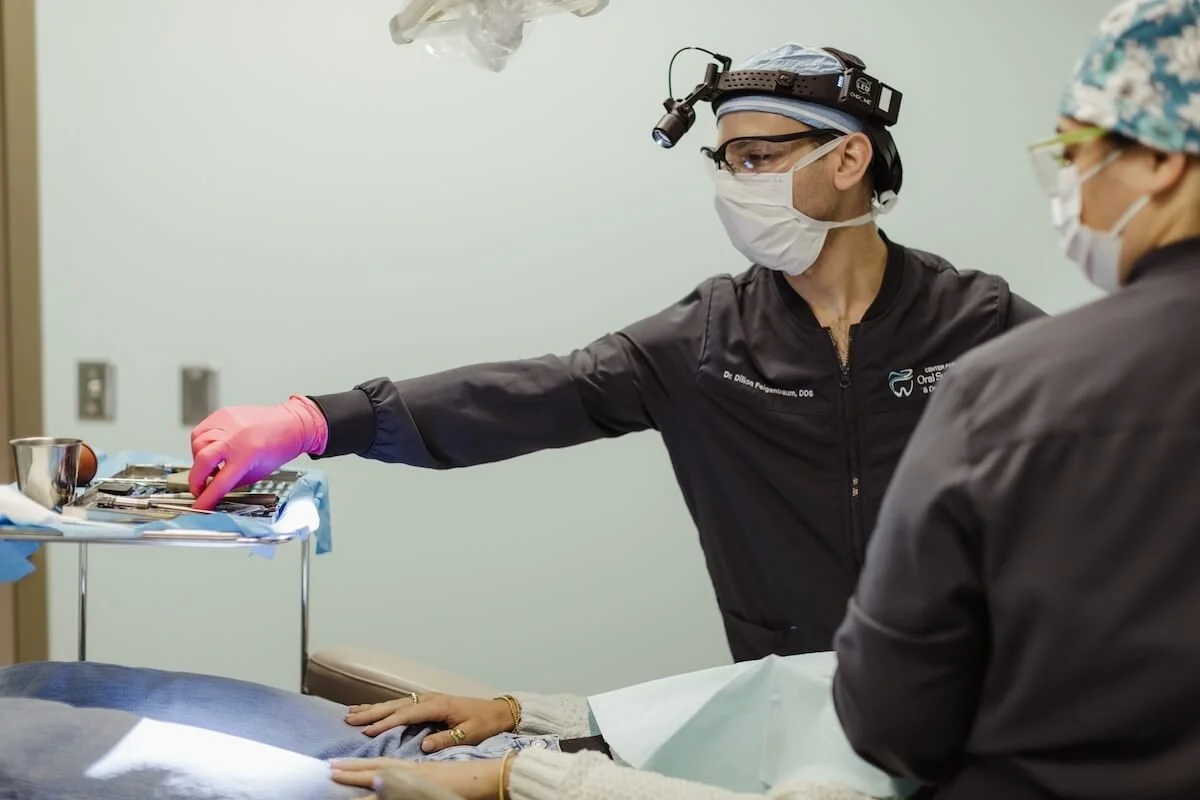
Surgical Exposure: In a straightforward procedure performed in our office (often under local anesthesia and laughing gas), the gum tissue covering the impacted tooth is lifted.
Bracketing: The oral surgeon bonds an orthodontic bracket to the exposed tooth using a miniature gold chain.
Chain Placement: The chain is guided back to the orthodontic arch wire, sometimes remaining visible through a small hole in the gum, or sometimes the gum is sutured back to cover the site.
post-surgical eruption
Activation: Shortly after surgery (1 to 14 days), the orthodontist will attach a rubber band to the chain to apply a gentle, constant force on the impacted tooth.
Duration: This is a carefully controlled, slow process that may take up to a full year to complete. The goal is eruption, not extraction.
Gingival Health: Once the tooth is in its final position, minor "gum surgery" may be required to add bulk to the gum tissue over the relocated tooth to ensure its long-term health.
Surgical Instructions
We provide general surgical instructions on our website for the convenience of our patients. As always, your surgeon will provide instructions for your particular procedure and individual circumstances at the time of your consultation.
Hear From an Impacted Canines Parent


“They are caring and have a high degree of expertise.”
Hear from a mother whose children have been through several surgeries with our team at the Center for Oral Surgery + Dental Implants.
Meet Our Experienced Team
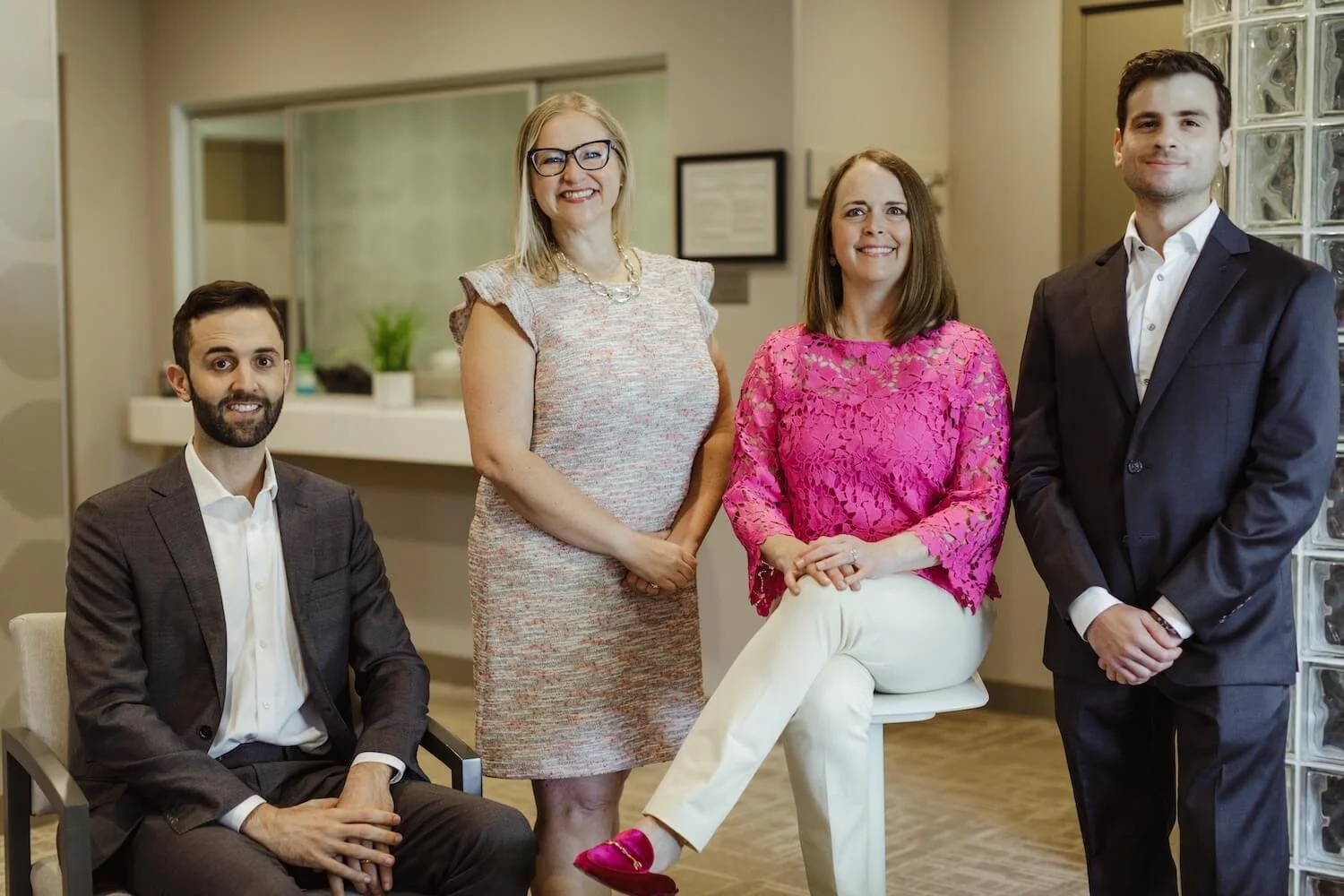
Our oral and maxillofacial surgeons have specialized expertise in these collaborative ortho-surgical procedures. We work closely with your orthodontist to manage the entire process, ensuring the successful eruption of your crucial cuspid teeth.
Why Should You Choose the Center for Oral Surgery + Dental Implants?
The success of moving an impacted tooth depends entirely on precise surgical technique and seamless coordination with your orthodontist. Our surgeons have the specialized training to safely expose the tooth, place the bracket, and manage the delicate soft tissues, increasing the likelihood of saving this critical tooth and achieving a beautiful, functional bite.